

Some pool projects creep up on you — a surface that feels rougher each season, a waterline that stops coming clean. This one was harder to ignore. The water had turned green, and the interior underneath was worn enough that resurfacing was the sensible answer.
What follows is the job in the order it happened: the pool as we found it, the shell with the water out, and the same pool refilled with a new PebbleTec finish. The photographs are from the job itself, including the start-up clutter that most finished-project galleries leave out.
It is also a useful example of what a resurfacing does and does not fix. Green water is a water problem; a worn interior is a surface problem. This pool had both, which is why the water came out and the interior was renewed rather than simply cleaned.
The pool as we found it
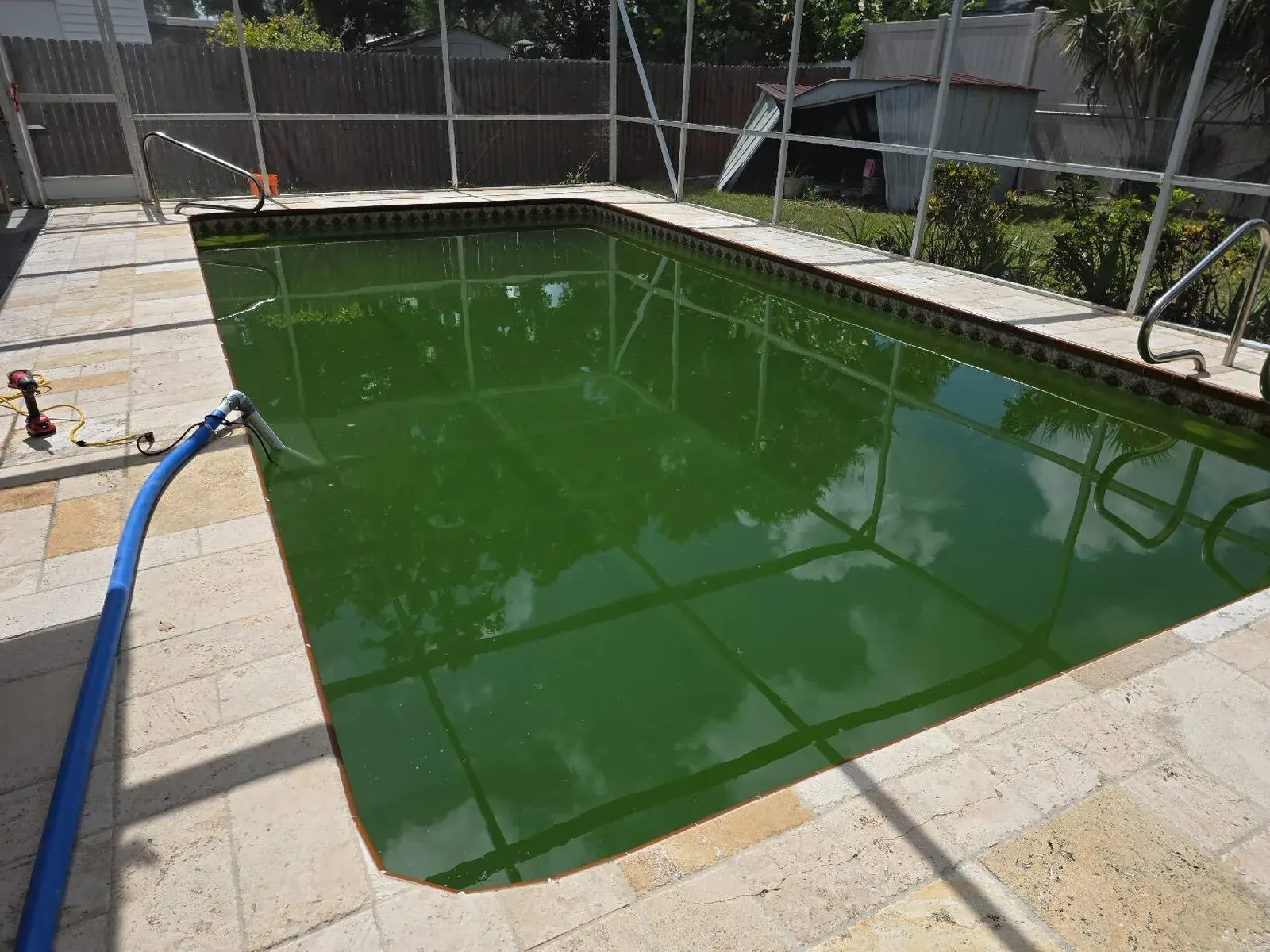
The pool sits inside a screened enclosure over a paver deck, a common setup in Sarasota. Before work started the water was green and the interior looked tired. The waterline tile band and the deck were already there; this job was about the pool's interior surface rather than a wider remodel.
It helps to separate two problems that often arrive together. Green water is a water-quality issue — circulation, filtration, sanitiser, or all three drifting out of balance. A worn interior is a surface issue. One can make the other more obvious, but they are not the same job. Here the surface needed renewing, so the water was coming out either way.
With the water out
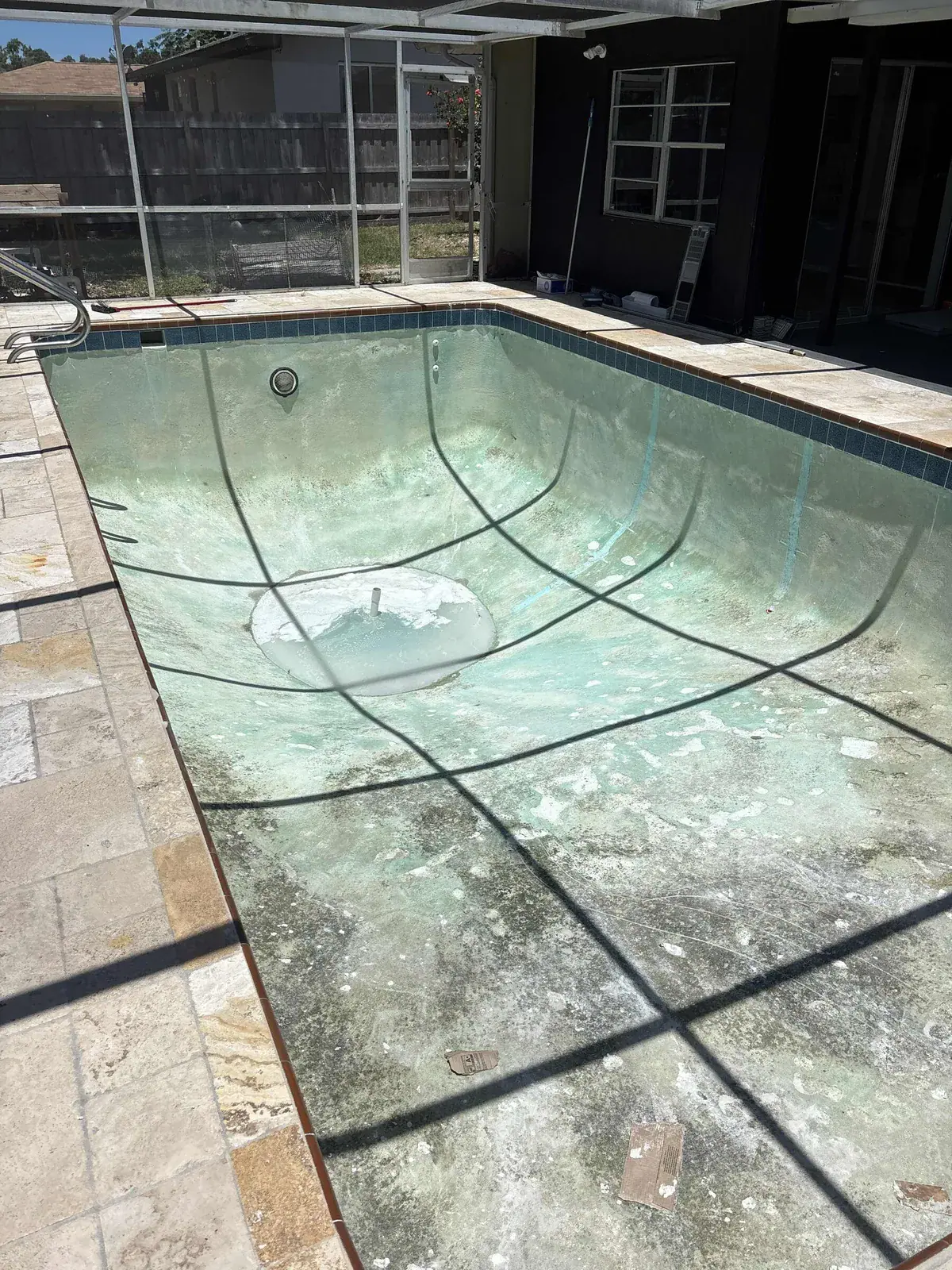
The photograph above is the pool with the water out and the old interior exposed. This is the least glamorous part of a resurfacing and the part that decides how the finished job holds up: the old surface has to be dealt with, the shell checked, and the new finish applied to a sound base.
We don't have an application photograph from this job, so there isn't one here. Rather than borrow a picture from another project, we've left the gap. The sequence goes from drained shell to refilled pool, and the captions say so.
The new PebbleTec finish
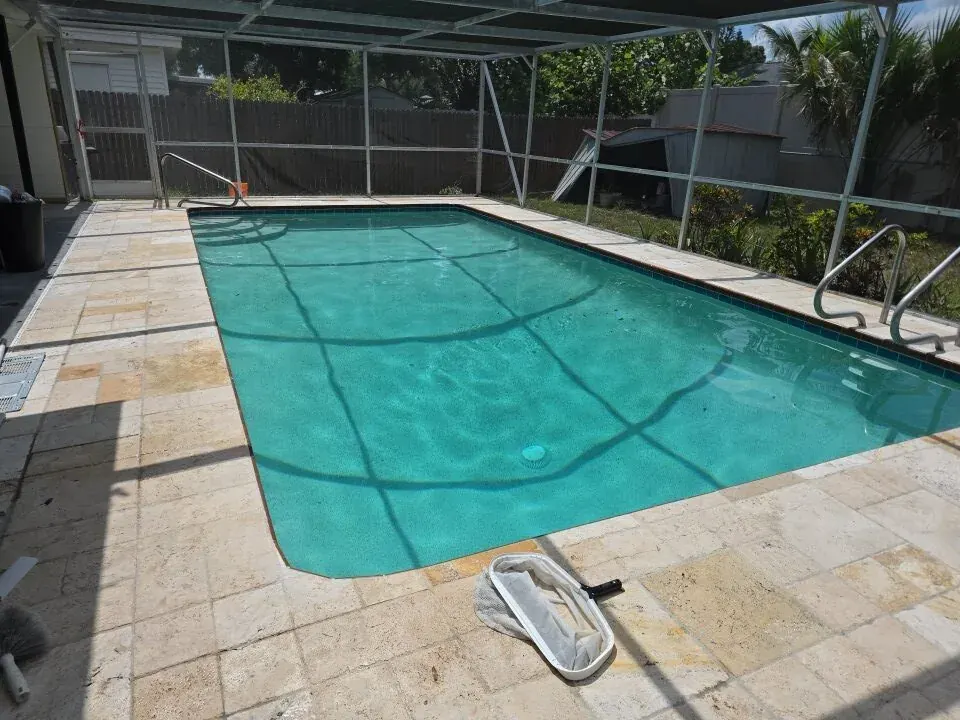
The new interior is a PebbleTec finish. In the after photographs the water reads clear turquoise over a light, even surface — the change that matters most to the owner, and the one a camera can actually show. The exact colour and blend aren't recorded in the job notes, so we haven't guessed at them.
Nothing in the job notes describes new tile, coping or decking, and the before and after photographs show the same waterline tile band and pavers. A resurfacing renews the interior; it doesn't re-tile the pool or lift the deck. If those are part of what you want changed, that is a different scope and worth saying up front.
Refill, start-up and the first few weeks
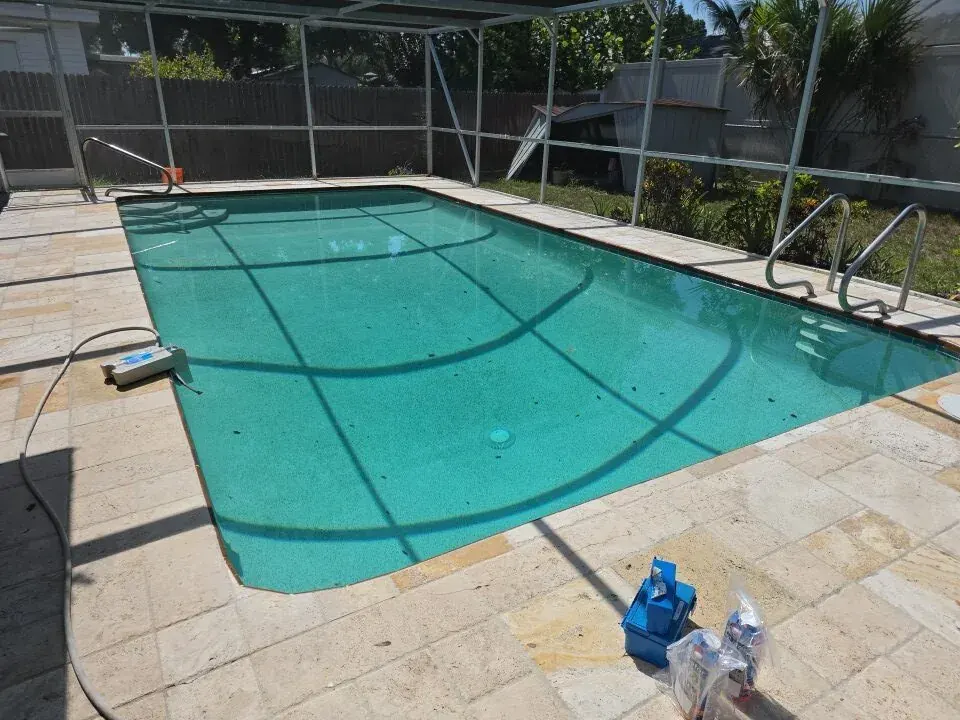
The last photographs were taken during start-up, not after a styling crew had been through. You can see the hose, the test kit and a cleaner still on the deck. That is what a pool looks like when it is coming back into service: refilled, balanced and checked over a series of visits before it is handed back.
Start-up is not a formality. A new surface is at its most vulnerable early on, and the water needs to be brought along carefully rather than forced into balance in a single visit.
At handover, the useful questions are practical ones: what the surface wants from the water in the first month, when the pool can be swum in, and who is checking the chemistry. Get those answered and the finish has the best start it can have.
What these photos show, and what they don't
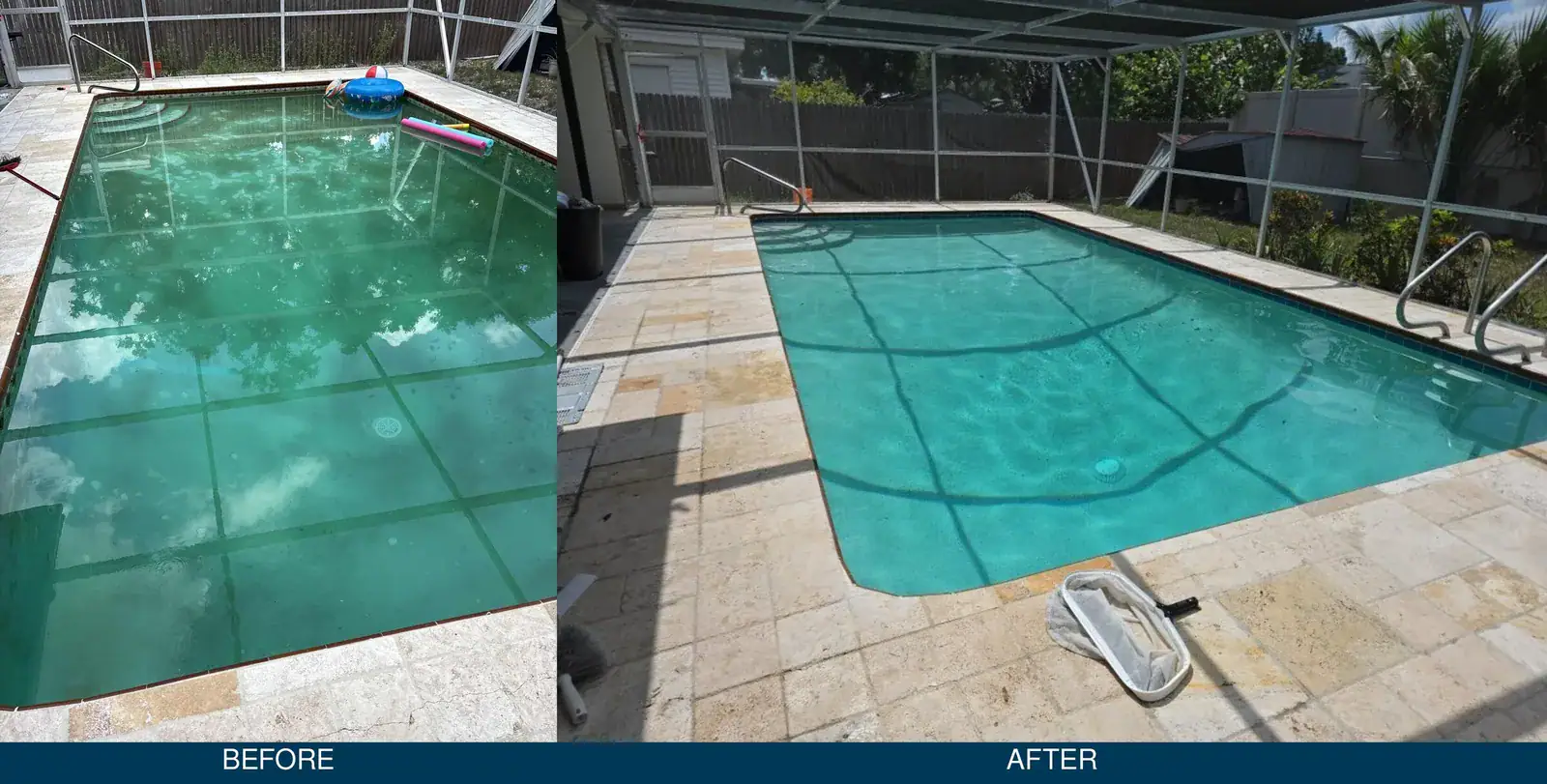
Honest project photographs are more useful than perfect ones, as long as you know what you are looking at. This set shows the before, the drained shell, the refilled pool and a side-by-side comparison. It does not show new tile, coping or decking — nothing in the job notes describes that work, so we have not claimed it. It does not record the finish colour, the date, the price or how long the job took. Those are left out rather than filled in.
Green pool or worn surface? What to check first
If your pool has gone green, start with the water: circulation, filtration, sanitiser and a proper test. Plenty of green pools come back without any resurfacing at all. If the water clears but the surface still feels rough, looks patchy, or sheds material, then the interior is the conversation.
A useful check is to look at the pool with the water clear and the light on it. Roughness underfoot, a chalky feel, or staining that will not brush away are all reasons to ask for an assessment. Green water on its own is not.
Planning a resurfacing in Sarasota?
If you are weighing up a resurfacing — or you are not sure whether you need one — start with our pool renovation services. If the water has gone green and you want it back in service first, our green-to-clean service is the place to start. Either way, you can send us the details and a few photos, and we will tell you what we see.