

What does pool resurfacing look like before the water goes back in? At this Sarasota pool, the answer is a crew working across the interior with hoses, buckets and hand tools—not a quick coat brushed over the old surface.
These photographs from an On-Time Pool Service renovation project take you inside the PebbleTec application stage. One view shows the exposed shell; others show the crew applying and working the new material across the floor and steps. The fresh, pale surface already changes the appearance of the empty pool, but this is the work in progress, not a finished-pool reveal.
The prepared shell makes the work visible
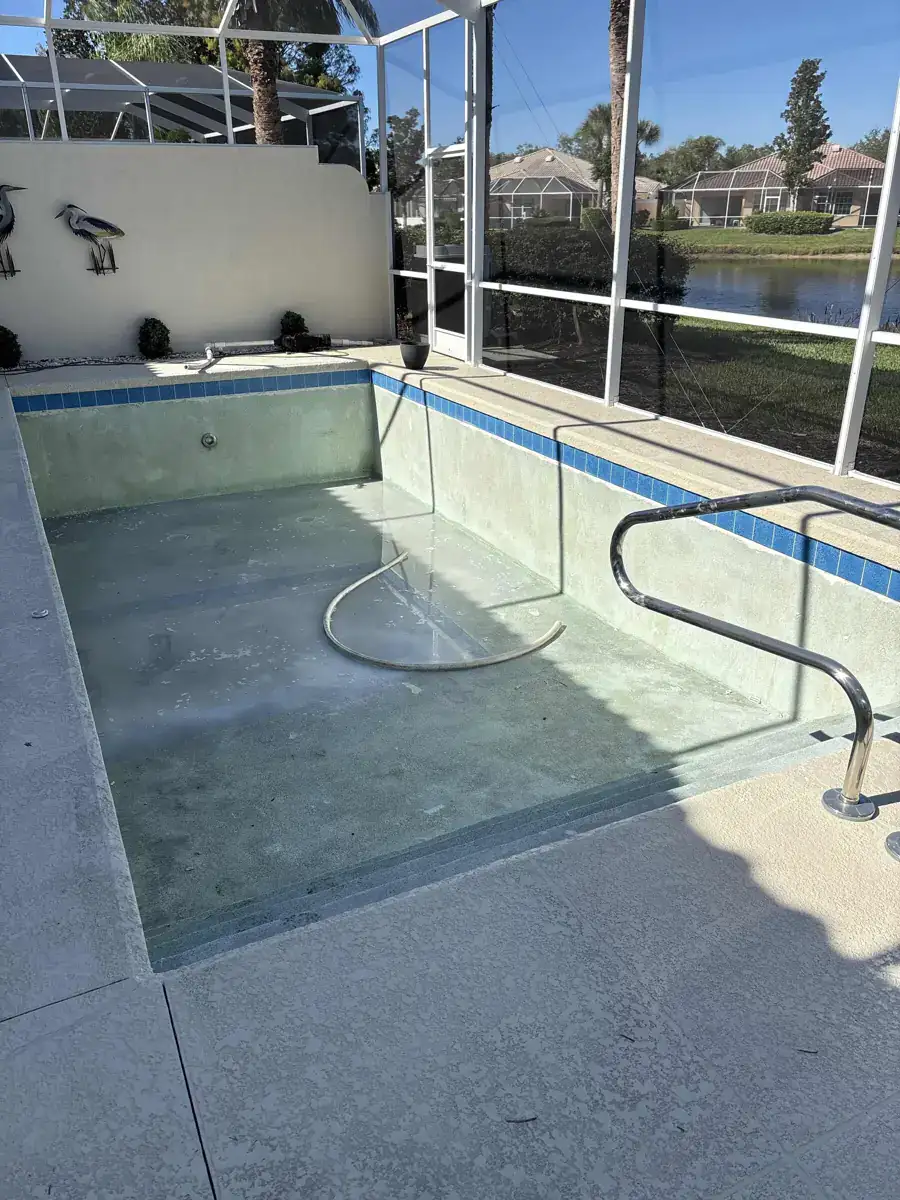
With the pool emptied, its shape is easy to read. The straight walls, floor and broad entry steps are visible beneath the blue waterline tile, with a hose lying across the exposed interior. There is no water to hide the surface or the places where one part of the pool meets another.
The project’s supplied captions identify this as the prepared stage before PebbleTec application. For a homeowner considering resurfacing, it is a useful reminder of what the job involves: the pool’s interior is the working surface. The photographs document an interior-resurfacing project; they do not establish that the surrounding deck or waterline tile was replaced.
A coordinated application, from hose to hand tools
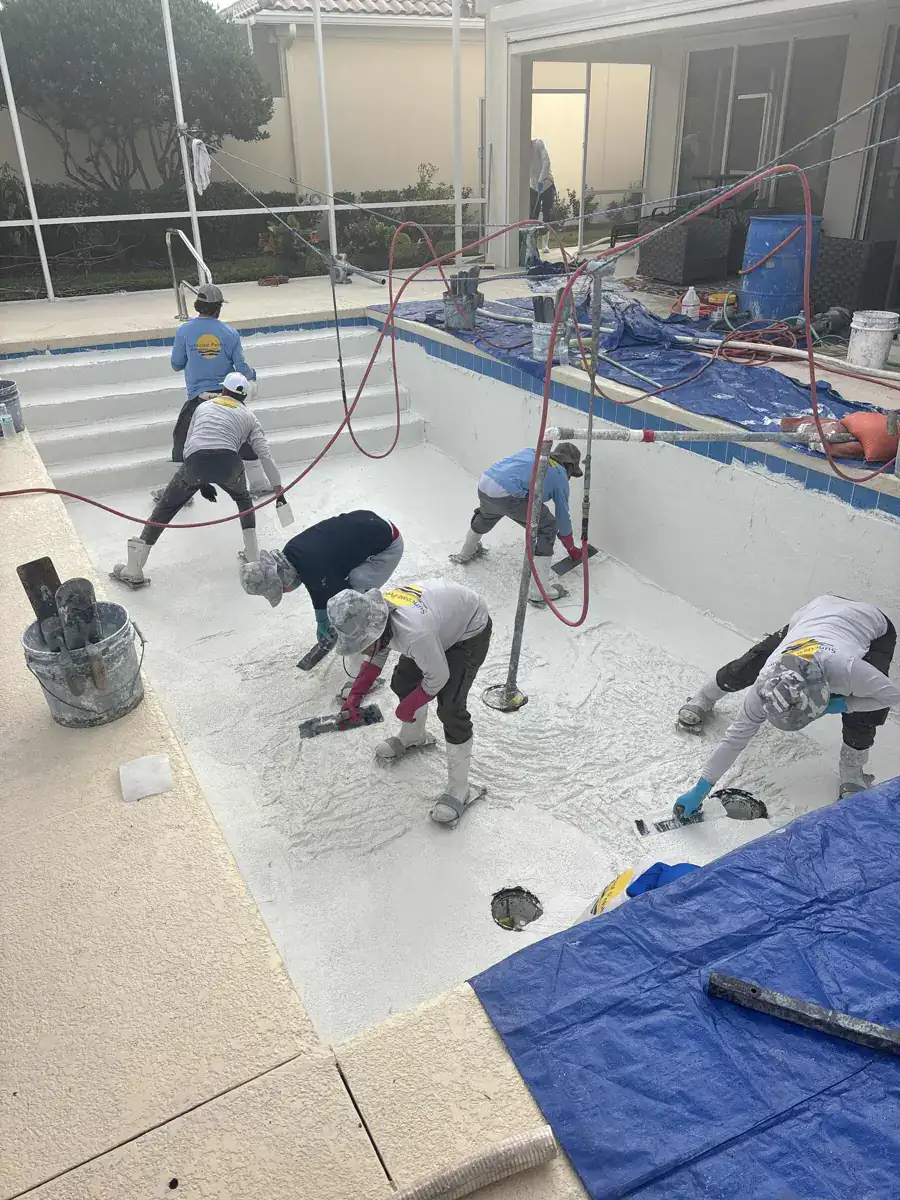
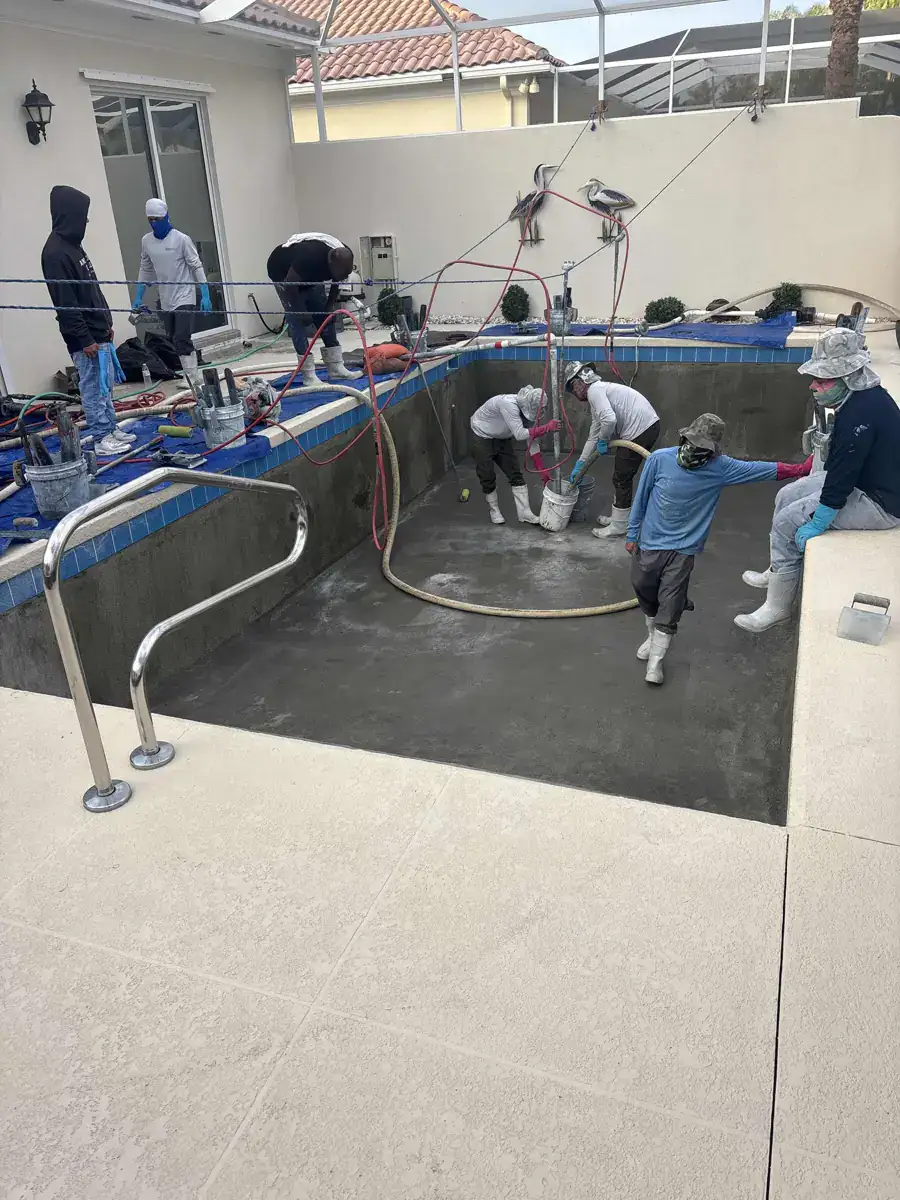
In another view, the application crew is inside the drained pool with hoses and buckets, while additional equipment and materials are arranged on the deck. Blue protective sheets cover parts of the surrounding working area. The pool is clearly an active job site, with different members of the crew working around the same interior.
PebbleTec’s manufacturer describes its general installation process as pumping the mixed finish through a hose, applying it to the pool surface and then working it by hand. That gives helpful context to the equipment in these photographs. The pictures do not show every installation step, but they do show that the new finish is being handled and shaped on site—not simply laid down as a ready-made layer.
The handwork is clearest across the floor and steps
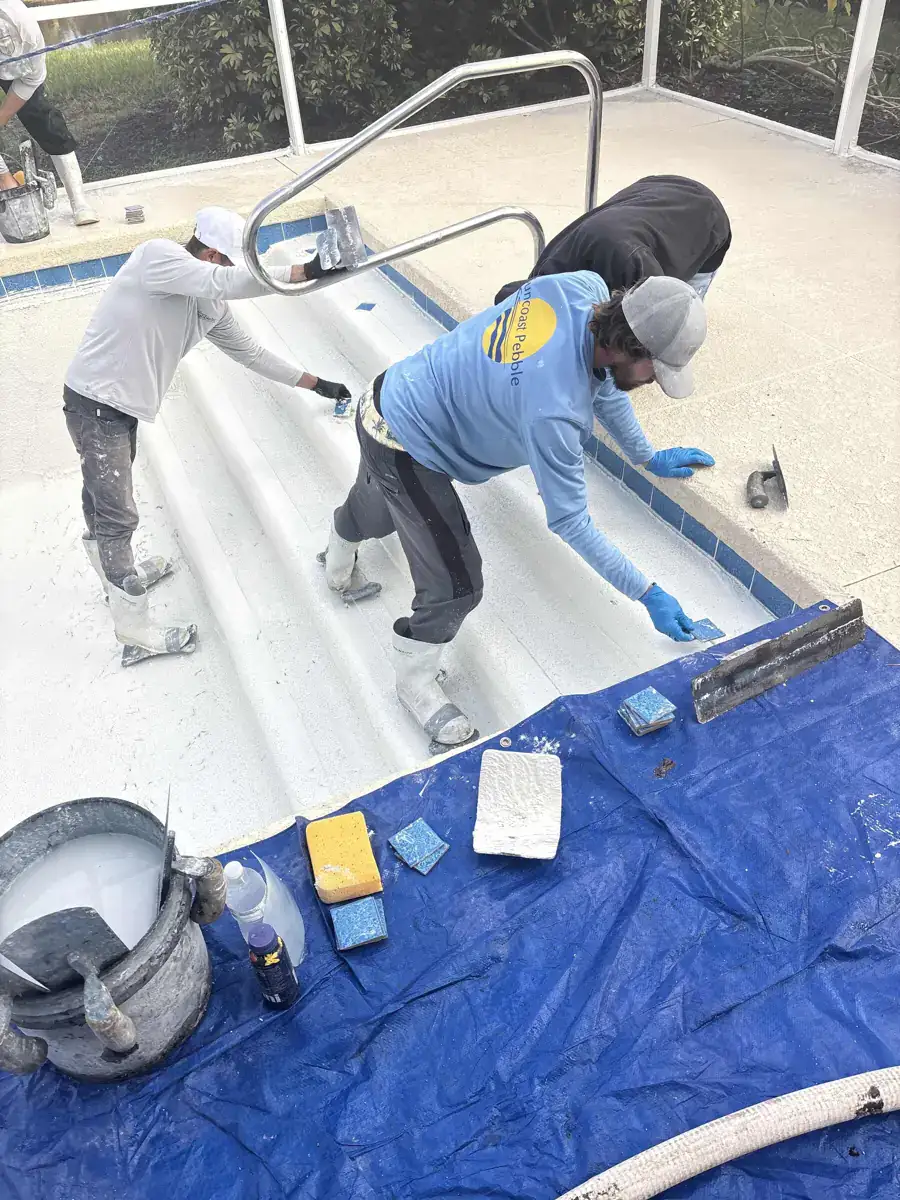
The wider application photograph shows crew members bent over the fresh, pale material, working with hand tools across the floor. The closer photograph draws attention to the steps: the crew is working along the treads and upright faces, with the blue tile providing a clear outline above the new interior.
Those changes in shape are where the process becomes especially interesting to watch. A pool finish has to follow more than a broad, open floor. It continues around corners, up walls and across the entry steps. PebbleTec identifies hand-troweling as a stage that compacts the applied material before the finish is exposed. Here, the visible handwork helps explain how the surface is worked around the pool’s individual features.
Application is one part of the resurfacing story
These are application-stage photographs, so they do not show the final water colour or a refilled, ready-to-use pool. PebbleTec’s general process also includes exposing and detailing the finish, followed by filling and appropriate start-up care. Those later stages should not be confused with the day the material is applied.
What this photo set does show well is the work behind an interior update: a prepared shell, a coordinated crew and hands-on finishing around the floor and steps. If you are considering a similar update, explore our pool renovation and resurfacing services, then contact On-Time Pool Service to discuss your pool and the finish you have in mind.
General process reference: PebbleTec’s installation process.